Oral Allergy Syndrome (OAS), also known as pollen-food allergy syndrome, is a type of food allergy that occurs in people who are allergic to certain pollen proteins and experience allergic reactions when eating raw fruits, vegetables, nuts, or seeds. It’s caused by cross-reactivity between pollen allergens and proteins found in various plant foods.
Underlying Mechanism
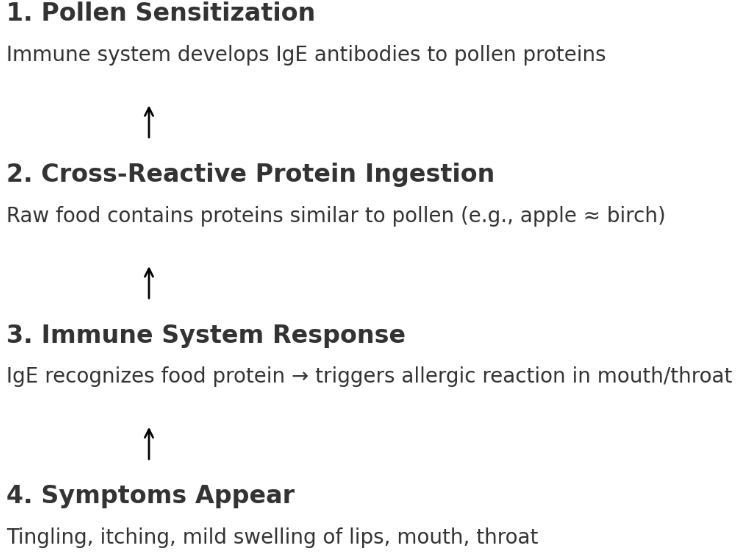
Oral allergy syndrome is an IgE-mediated allergic reaction. Here's how it works:
- Sensitization to Pollen: The immune system develops antibodies (IgE) to certain proteins found in pollens like birch, ragweed, or grasses.
- Cross-Reactivity: Some raw fruits and vegetables contain proteins that are structurally similar to those pollen proteins.
- Immune Response: When a sensitized person eats a cross-reactive food, the immune system mistakenly identifies the food protein as a threat and triggers a localized allergic reaction in the mouth and throat.
Common Pollen-Food Cross-Reactions
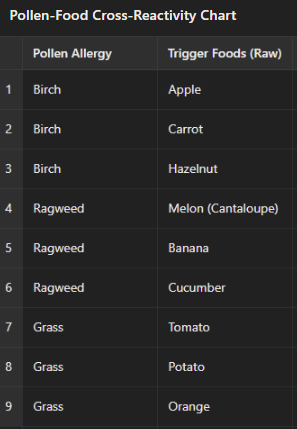
| Pollen Allergy | Common Trigger Foods (Raw) |
|---|---|
| Birch | Apple, pear, cherry, peach, carrot, celery, hazelnut, soy (especially soy drinks and protein powders — see below) |
| Ragweed | Melon (especially cantaloupe), banana, cucumber, zucchini |
| Grass | Tomato, potato, orange, melon |
| Mugwort | Celery, carrot and spices such as coriander, fennel and aniseed (“mugwort–celery–spice syndrome”; reactions can be severe) |
Symptoms
Symptoms are typically mild and localized to the mouth, lips, tongue, and throat, appearing within minutes of eating the offending food:
- Itching or tingling of the lips, mouth, or throat
- Mild swelling of lips, tongue, or throat
- Scratchy throat
- Redness or irritation inside the mouth
- Occasionally, ear itching
Symptoms usually resolve within 30 minutes and are rarely life-threatening.
Diagnosis
Diagnosis often involves:
- Medical history: Especially history of seasonal allergies and symptom timing related to specific foods
- Skin prick testing: For pollen and food allergens
- Blood tests: Measuring specific IgE levels to pollen and food proteins
- Oral food challenge: Supervised test to confirm reactivity
Anaphylaxis: act fast. After an exposure, any breathing symptom (wheeze, repeated cough, throat tightness, hoarse voice), fainting or dizziness, or symptoms in two or more body systems (for example hives plus vomiting) is anaphylaxis — even without hives.
- Give epinephrine right away (auto-injector or nasal spray). Do not wait to see if symptoms get better.
- Call 911, even if symptoms improve.
- Lie flat with legs raised (sit up if breathing is hard). Give a second dose after 5–15 minutes if there is no improvement.
Antihistamines and steroids do not treat anaphylaxis and must never delay epinephrine. Carry two doses and follow the written emergency action plan from your allergist.
Prevention and Management
- Avoid raw trigger foods: Cooking breaks down the birch-type (PR-10) and profilin proteins behind most OAS, so cooked versions are often tolerated. Cooking does not destroy lipid transfer proteins (LTPs), seed storage proteins or some celery allergens, so ask your allergist whether this applies to you.
- Peeling fruits/vegetables: Many of the proteins are in the skin.
- Avoid during high pollen seasons: Sensitivity can be worse during peak allergy times.
- Antihistamines: Can ease mild mouth symptoms after an accidental exposure, but do not take them in advance in order to eat a trigger food; they can mask the early signs of a more serious reaction and do not prevent anaphylaxis.
- Allergen immunotherapy (allergy shots): May reduce both pollen and food symptoms in some patients.
Rare Complications
- Though OAS is usually mild, systemic reactions (e.g., hives, wheezing, or anaphylaxis) can occasionally occur, especially if:
- The person has a history of severe food allergies
- They ingest large quantities of the offending food
- They consume it on an empty stomach or during exercise, or with alcohol or NSAIDs
- They are sensitized to lipid transfer proteins (LTPs), for example in peach or hazelnut; LTP reactions are more often systemic, and cooking does not prevent them
- They are allergic to birch pollen and consume soy drinks or soy protein powders (the soy protein Gly m 4 can cause anaphylaxis)
- They have mugwort–celery–spice syndrome (reactions to celery and spices can be severe, even when cooked)
Key Takeaways
- OAS is a cross-reaction between pollen and plant food proteins
- It mostly causes mild, oral symptoms
- It’s common in people with seasonal allergic rhinitis
- Cooking or peeling foods can often prevent symptoms from birch-type proteins, but not from LTPs, storage proteins or some celery allergens
- It’s usually not dangerous, but awareness and management are important
Oral Allergy - Immune Response